
Starting a business is exciting, scary and—let’s be honest—it can be confusing. Knowing the right business structure will help you reap profits and be able to manage your business even at large scale.
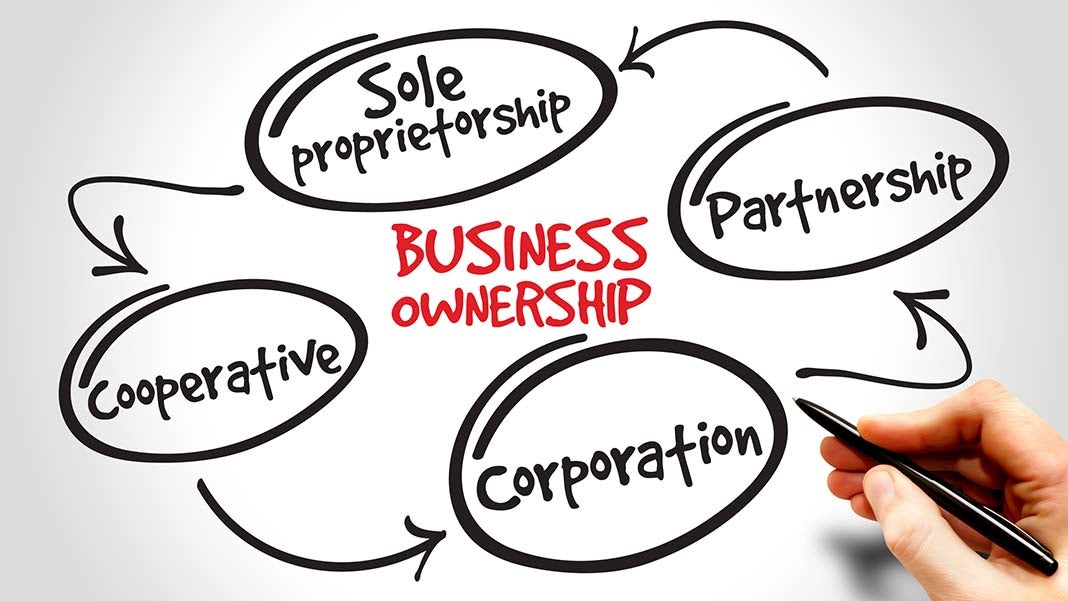
You don’t need an MBA or formal business training to start and grow a very successful business, but there are some important choices you’ll need to make right from the beginning, starting with choosing your business structure or entity.
What are the most common business structures or entities?
The most common business structures are sole proprietorship, partnership, limited liability company (LLC), and corporation
Why is your choice of business structure very Important?
The choice you make about what type of business structure is appropriate for your company will affect how much you pay in taxes, the level of risk or liability to your personal assets (your house, your personal savings), and even your ability to raise money from angel investors or venture capitalists.
So, the structure you choose matters.
This guide will explain the basics of common business structures, but we can’t tell you exactly which structure you should choose—if you need that kind of advice, you should consult a lawyer.
1. Sole proprietorship
The simplest business structure is the sole proprietorship. Your business is a sole proprietorship if you don’t create a separate legal entity for it. This is true whether you operate it in your own name, or under a trade name.
The main advantage of the sole proprietorship is that it’s fairly simple and inexpensive. The disadvantage is that it doesn’t create a legal separation between you and your personal assets and your business assets. If you’re sued or your business folds, your personal assets are fair game for creditors and in terms of legal liability.
Who is The Importance sole proprietorship ?
If you are planning on being self-employed and running your small business by yourself, a sole proprietorship may be for you.
For instance, a personal trainer who is planning on offering one-on-one coaching for clients would be a great candidate for a sole proprietorship. So too would an artist who creates beautiful one-of-a-kind jewelry to sell on Etsy.
How do you Start a sole proprietorship?
A sole proprietorship is also the easiest business to form; no official registration action is required on your part.
However, there will still likely be licensing, permits, and regulatory hoops to jump through, depending on your industry. You’ll want to check with your local secretary of state’s office website.
Additionally, if you’re planning on doing business under a name that isn’t your own, you’ll need to file for a DBA, or “doing business as.”
What should you be Know Before Starting As A Sole Proprietor?
A sole proprietorship is fairly straightforward too start, but here are some considerations:
It’s relatively inexpensive: The biggest cost you’re looking at is probably the expense associated with setting up your DBA or “doing business as.” Depending on your state, you can typically obtain this through the county government, and there is usually a small registration fee. Some states also require a public notice in the form of a newspaper ad. Often, the whole process will cost less than $100.
Your taxes will be fairly easy: A sole proprietorship is what’s known as a “pass-through” tax entity, meaning that all the profits and losses pass directly through the business owner and are reported on their taxes. If you’re the only person working for your sole proprietorship, a Schedule C form, a form 1040, and a Schedule SE form are the only additions you’ll need to make.
You can still have employees: Just because you’re a “sole” proprietor doesn’t mean you can’t have employees. If you have employees, your taxes will be a bit more complicated, but not by much; see the IRS sole proprietorship page for more information.
You may have more difficulty raising money: As you cannot sell any stock in your company, you will not be able to increase your company’s worth that way.
You might have trouble getting a small business loan: Banks are often reluctant to give business loans to sole proprietorships, as they are seen as less credible.
You are assuming full liability: If your business fails and you become overburdened with debt, your personal assets (like your car, house, and personal savings) are at risk. You are also personally liable for any legal issues that may come up. That means that if someone sues you, they could go after your personal assets.
2. Partnership
For Instance, let’s go back to that example of the personal trainer, who could start a sole proprietorship business and offer client coaching.
But, maybe she wants to pair up with a nutritionist, and the two of them plan on building a fitness empire together. Both entrepreneurs share ownership and have shared input and participation in the company.
Now you no longer have a sole proprietorship—you have a partnership.
Still a fairly simple business structure, a partnership involves two or more individuals sharing ownership of their new business. They’ll both contribute to the business in some way, and share in both profits and losses.
Partnerships are harder to describe because they change so much. They are governed by state laws, but a Uniform Partnership Act has become the law in most states. That act, however, mostly sets the specific partnership agreement as the real legal core of the partnership, so the legal details can vary widely.
Usually, the income or loss from partnerships passes through to the partners, without any partnership tax. The agreements can define different levels of risk, which is why you’ll read about some partnerships that have general partners and limited partners, with different levels of risk for each. Your partnership agreement should clearly define what happens if a partner withdraws, buy and sell arrangements for partners, and liquidation arrangements if that becomes necessary.
If you think a partnership might work for your business, make sure you do it right. Find an attorney with experience in partnerships, and ask them to give you references from present and past clients. This is a complicated area and a mistake in your partnership agreement will cause a lot of problems.
Who is a partnership for?
Think of a partnership as a slightly expanded version of a sole proprietorship. It’s similarly easy to form, and best for two or more people who want to formally agree to be business partners, and start a business together.
So, that personal trainer and nutritionist pairing? A perfect partnership, as they both bring something to the table and are equal participants in the business. So too would be a pair of entrepreneurs launching an online consulting business, two master brewers starting a local brewery, and so on—you get the idea. If you’re thinking of starting a business partnership with your spouse, read more about that here.
Types of partnerships
There aren’t many, but the type of partnership you choose will depend upon how long you plan to be partners, and how active a role all involved parties will take in your new business.
1. General partnership: A general partnership assumes that all parties are equally involved; that is to say, all profits, liabilities, and duties within the company are distributed evenly. If there is an intentionally unequal split in the partnership (for instance, if one partner opts to accept a greater portion of work in exchange for a greater profit share), this must be noted on the official partnership agreement.
2.Limited partnership: A limited partnership is often used for partners who serve an investor role only, and have limited input into the actual running of the company. It’s a significantly more complex structure, and less frequently used.
3.Joint venture: If you plan on partnering up for one specific project, a joint venture might for you. Joint ventures function the same as a general partnership, but for a confined span of time, such as the completion of a one-time project.
How do you Start a partnership?
Similar to a sole proprietorship, simply doing business together effectively forms your partnership. However, if you plan on doing business under a name other than that of yourself and your partner, you’ll need to file a DBA.
You may also need to apply for certain licenses and permits, depending on your business and your state.
What should you be aware of Before Starting A Partnership?
Here are a few things to keep in mind before launching your partnership.
A partnership agreement is strongly recommended: While not essential, outlining a partnership agreement (preferably under the supervision of each partner’s attorney) is a good way to make sure you begin your partnership right. This can help you clearly lay out who is responsible for what, and what will happen if you decide to stop working together.
Partnerships are also “pass-through” tax entities: Like a sole proprietorship, partnerships “pass through” all profits and losses to the partners. See the IRS partnership page for more info on filing your partnership taxes.
Don’t forget about added expenses: Since it’s a good idea to have a lawyer look over your partnership agreement, don’t forget to factor in this added expense.
Make sure you have a partner you can trust: It should go without saying, but as partners are solely responsible for any bad business dealings or debt that they may incur, make sure that you choose a partner that you trust with your business, your credit score, and your reputation. Again, don’t skip the partnership agreement—it will help you avoid problems down the road.
3.Limited Liability Corporation (LLC)
Should your business fall on hard times, does the idea of being held personally responsible for all losses sound intimidating?
It’s understandable—plenty of would-be entrepreneurs shudder at the thought of the bank seizing their personal assets should the business go south.
A limited liability corporation (or LLC) is, in some ways, the best of both worlds. It allows for the flexibility of a partnership or sole proprietorship, but, as the name suggests, limits the liability of those involved, similar to a corporation. An LLC is usually a lot like an S corporation, and offers a combination of some limitation on legal liability and some favorable tax treatment for profits and transfer of assets.
This is a newer form of legal entity, and be aware that LLCs vary a lot state to state, so the advisability and benefits of forming one will also vary. It’s a good idea to talk to a local attorney if you’re interested in setting up an LLC.
Who is a limited liability corporation for?
If the idea of taking on complete personal liability for your business makes you hesitant to start one, you might want to consider a limited liability corporation.
If you have substantial personal assets that you wish to protect and not involve in your business, an LLC might be right for you. On the same note, if you’re in an industry where lawsuits are common, having an LLC as your business structure can potentially protect your personal assets.
How do you form a limited liability corporation?
The process of forming an LLC is slightly more complex than a sole proprietorship or a partnership; you’ll have to choose a compliant business name, file your articles of organization, and create an operating agreement, in addition to any industry-specific licenses or permits and a DBA, should you choose to use one.
What should you be aware of Before Opting For LLC?
While there are clear advantages to forming an LLC, it’s a more complex business structure than a sole proprietorship or a partnership, and you should determine first whether or not an LLC is right for you.
With added protection comes added difficulty: Compared to a sole proprietorship or a partnership, there’s no doubt about it: an LLC is more difficult to form. While this shouldn’t deter you, it’s a good thing to keep in mind.
Tax incentives are a big plus: An LLC is still a “pass-through” tax entity. But, with an LLC, you’ll be taxed on your share of the profits only, which are filed on your personal taxes. See the IRS limited liability company page for more info.
4.Corporation
When most people think of a business structure, a corporation is likely what jumps to mind first.
Shareholders, a more complex legal structure, and more intricate tax requirements are all characteristics of a corporation.
Corporations are either the standard C corporation, the small business S corporation, or the benefit corporation or B corp. The C corporation is the classic legal entity of the vast majority of successful companies in the United States.
Corporations can switch from C to S and back again, but not often. The IRS has strict rules for when and how those switches are made. You’ll almost always want to have your CPA, and in some cases, your attorney, guide you through the legal requirements for switching.
Keep reading to learn more about the different corporation types, and which kind of business is best suited to each type.
Who is a corporation for?
A corporation is the most complex business structure; so, if you’re starting a very small business and are working either by yourself or with just a few others (like a partner or a few employees), then a corporation might not be for you.
This business structure is recommended for companies that are larger and more established, have many employees, intend to sell stock in their company, will be scaling quickly, have many outside investors, or some combination of these traits.
How do I form a corporation?
To form a corporation, you’ll have to have registered your business name. You’ll also need to file your articles of incorporation, as well as get a Federal Tax Identification number (also known as an employer identification number or EIN).
For more detailed information on how to form a corporation, see our “further reading” at the end of this section.
What should you be aware of Before Opting For Corporation?
While there are advantages to forming a corporation, it’s certainly not for everyone, as corporations are the most difficult types of businesses to form. Here are some things to keep in mind:
You’ll have the most limited liability possible: A corporation is an entity unto itself; the concerns that a sole proprietor or partnership face if the business goes bad aren’t usually as present for a corporation. With a corporation, there’s more protection for personal assets.
Corporations have more potential to raise capital: Corporations can sell stock, which increases their ability to get investors.
Separate taxation from personal taxes: Corporate taxes are filed separately from personal taxes, meaning that your business will be eligible for corporate tax breaks. See the IRS corporation page for more info.
Corporations are more difficult to set up: The biggest potential downside to starting a corporation is the fact that it’s the most complicated business structure, and therefore takes the most work to establish. With a sole proprietorship, you can essentially set up a business simply by producing work or making a sale. With a corporation, there is official paperwork that you’ll need to file.
Double taxation can be a factor: Depending on the type of corporation you establish, this may not be an issue; for example, S corps are not subject to double taxation, as the shareholders are the ones who pay state income tax, not the corporation itself. However, if you establish a traditional C corporation, you will be responsible for both income taxes on earnings from the corporation, as well as paying taxes on dividends received from the corporation. You will probably want to work with a business accountant on this one—which may be an added expense and hassle for a very small business.